CO-45 Denial Code A Complete Guide for Healthcare Providers

The CO 45 denial code is a common term in the healthcare industry, specifically within medical billing and coding practices. It often appears in Explanation of Benefits (EOB) or remittance advice from insurance providers, signalling a claim rejection or denial. If you’re a medical biller, coder, or healthcare provider, understanding what the CO-45 denial code signifies, its reasons, and how to resolve it is crucial for confirming proper repayment. We will break down the CO-45 denial code, its description, common reasons for denial, and potential solutions to address the issue effectively.
What is the CO-45 Denial Code?
The CO 45 denial code is a standard code used by insurance companies to indicate that a claim has been rejected because the charges exceed the maximum allowable amount under the terms of the patient’s policy. It is part of the Common Working File system and is often used in conjunction with other codes to clarify the specifics of the claim denial.
CO-45 Denial Code Description
When a CO-45 code is present on a remittance advice, it generally means that the reimbursement requested by the healthcare provider is above the insurance plan’s allowable limits for the services rendered. This could be due to a variety of factors, such as exceeding the typical or negotiated rate, incorrect coding, or even billing for a service that’s not covered under the patient’s insurance plan. Here’s a deeper look at the CO 45 denial code description:
- CO-45 Denial Code Description: “Charges exceed the fee schedule/maximum allowable or contracted/legislated fee arrangement.”
This means that the insurance company is not willing to pay the full amount that the provider has billed, because the billed amount is higher than what the insurance allows or the contracted fee schedule stipulates.

Higher Approvals, Faster Payouts: Specialized Chiropractic Billing

Error-Free Pediatric Billing: Maximize Practice Reimbursements
Common Reasons for the CO 45 Denial Code
There are several reasons why a CO-45 denial might occur. Understanding these reasons can help healthcare providers identify where the problem lies and take the necessary steps to resolve it. Here are some of the most common causes:
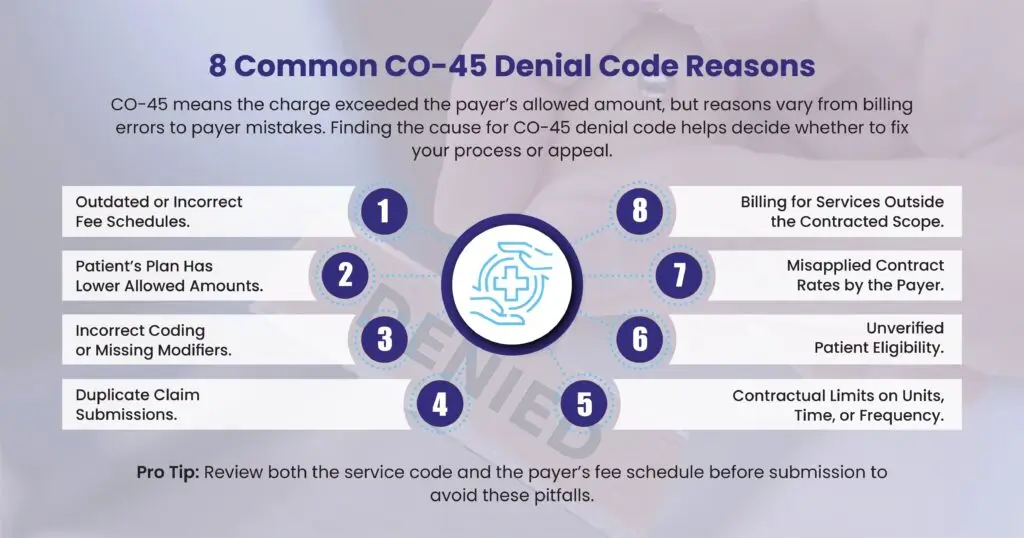
Exceeding the Maximum Allowable Charge
Each insurance company and healthcare plan has specific fee schedules or maximum allowable charges for medical services. These schedules dictate the highest amount the insurer is willing to pay for a service. If the healthcare provider bills above this amount, the claim will likely be rejected with a CO 45 denial code. For example, if a provider charges $500 for a procedure but the insurance company’s allowable amount for the same procedure is $400, the claim may be denied with a CO 45 code.
Out-of-Network Billing
If a patient sees a healthcare provider who is out-of-network, the insurance company may have a lower allowable amount for the services provided. If the billed amount is higher than what the insurer is willing to pay for out-of-network services, the claim could be denied with a CO-45 code.
Incorrect CPT or HCPCS Code
The CPT or HCPCS code used on the claim may be incorrect or improperly linked to the billed amount. This can cause discrepancies between the billed charge and the insurance company’s allowed amount, resulting in a CO-45 denial.
Bundled Services
Sometimes, multiple services provided during a single visit are considered “bundled” by the insurer. If a provider bills for these bundled services individually, the insurance company may deny part of the claim using a CO-45 code, since the insurer only pays for the bundled rate rather than the individual services.
Non-covered Services
Certain procedures or treatments may not be covered by the patient’s insurance plan. Even if the charges for those services are within the allowable limits, they may still be rejected under the CO-45 code if they fall outside the scope of the patient’s plan coverage.
Outdated Fee Schedule
Insurance companies regularly update their fee schedules to reflect changes in market rates or policy adjustments. If a claim is billed using an outdated or expired fee schedule, it could be denied with a CO-45 code.
How to Resolve the CO-45 Denial Code
While a CO-45 denial can be frustrating, it is not necessarily the end of the road. There are several steps a healthcare provider can take to resolve the issue and potentially get the claim paid.
Review the Fee Schedule
The first step in addressing a CO-45 denial is to verify the insurance company’s fee schedule for the specific service in question. Ensure that the billed charges fall within the allowable amounts outlined in the plan. If the fee schedule has changed, adjust your billing accordingly to match the new rates.
Check for Out-of-Network Charges
If the patient received care from an out-of-network provider, the insurer might have different reimbursement rates. Contact the insurance company to confirm the out-of-network allowable rates and, if applicable, consider renegotiating the payment terms with the patient to cover the difference.
Submit Correct Coding
Confirm that the correct CPT or HCPCS code is used for the service rendered. Coding errors can easily lead to payment denials. Verify that the codes are accurate and reflect the services actually provided. If a bundled service is denied, check whether the proper modifiers were used to reflect individual services.
Appeal the Denial
If you believe the denial was incorrect, you can appeal the decision with the insurance company. When filing an appeal, include detailed documentation that explains why the charges are justified, such as supporting medical records, a breakdown of the services provided, and any relevant contractual agreements with the insurer.
Negotiate with the Insurance Provider
In some cases, providers may be able to negotiate a higher reimbursement rate with the insurance company, especially if the provider has a contract or an established relationship with the insurer. This could help prevent future CO-45 denials.
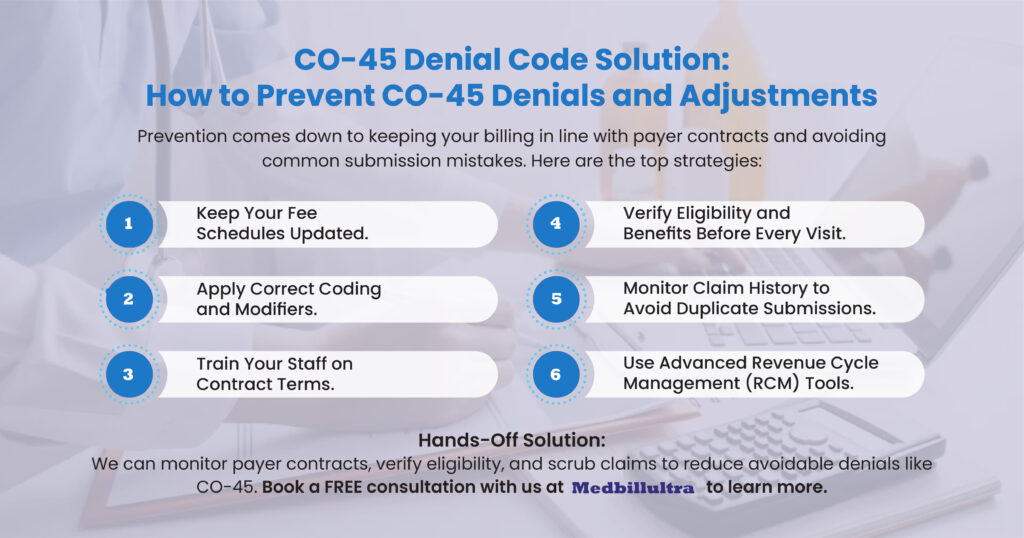
Additional Tips for Preventing CO-45 Denial Codes
While you can resolve CO-45 denials after they occur, it’s better to prevent them in the first place. Here are some proactive steps that providers can take to minimize the risk of a CO-45 denial:
Stay Up to Date with Fee Schedules
Regularly review and update your fee schedules to match the most current rates set by the insurance companies. This helps prevent denials based on outdated charges.
Verify Coverage and Network Status
Before providing services, always verify the patient’s insurance coverage and whether the provider is in-network. This ensures that you are billing the correct rate and prevents surprises later on.
Submit Claims Timely
Late claims or claims submitted outside of the timely filing window may also result in denials. Make sure to submit claims promptly to avoid issues with payment.
Conclusion
The CO-45 denial code serves as an important reminder to providers to be diligent in their billing practices, ensuring that charges fall within the allowable rates set by insurance companies. By understanding the reasons behind CO-45 denials and following the appropriate steps to address them, healthcare providers can minimize financial disruption and improve the claims process.
You Might Also Like

Higher Approvals, Faster Payouts: Specialized Chiropractic Billing

Error-Free Pediatric Billing: Maximize Practice Reimbursements

