CO-50 denial code is a frequent challenge in medical billing and revenue cycle management, often leading to delayed reimbursements and disrupted cash flow for healthcare providers. This denial commonly occurs when services are considered non-covered or fall outside payer policy guidelines, which can create confusion for billing and coding teams. Understanding the CO-50 denial code description, along with its underlying causes and correct resolution steps, is critical for reducing revenue loss and improving claim approval rates. This content offers a clear and comprehensive overview of the co 50 denial code, its effect on claims processing, and effective strategies to prevent it.
What Is CO-50 Denial Code?
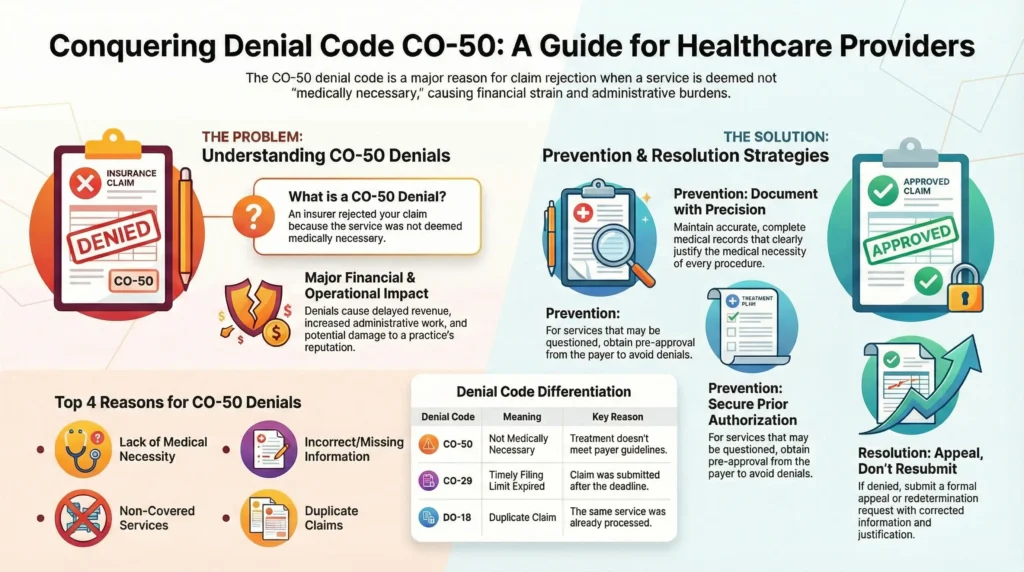
The CO-50 denial code is issued when a claim is denied because the service provided is not deemed medically necessary or is not covered under the patient’s insurance policy. In many cases, this denial indicates that the payer considers the service either experimental, investigational, cosmetic, or outside the scope of covered benefits for the specific plan. The co-50 denial code description falls under the Contractual Obligation (CO) category, meaning the provider is typically not allowed to bill the patient for the denied amount. As a result, unresolved CO-50 denials often lead to direct financial losses for healthcare organizations, making it crucial to understand and manage them effectively.
CO-50 Denial Code Description Explained
The official co 50 denial code description generally states that the service is not covered because it does not meet the payer’s medical necessity criteria or policy guidelines. While co 50 denial code descriptions may vary slightly by payer, they all indicate that the insurer has determined the billed service does not qualify for reimbursement under the patient’s plan. This denial code is commonly applied when documentation does not sufficiently support the necessity of the service, or when the procedure is excluded from coverage based on payer policies. Understanding denial code co-50 descriptions is essential for identifying whether the issue lies in documentation, coding, or benefit limitations.
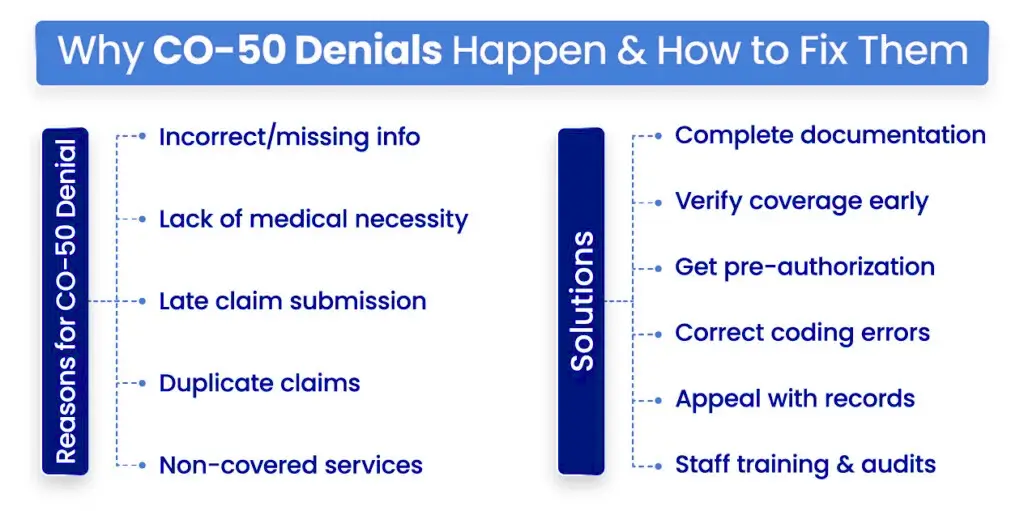
The denial code CO-50 can occur for several reasons, many of which are preventable with proper billing controls. One of the most frequent causes is lack of medical necessity documentation. When clinical notes fail to clearly justify why a service was required, payers may deny the claim using the CO-50 code. Another common cause of co 50 denial code is billing services that are explicitly excluded from coverage under the patient’s insurance plan. This includes experimental treatments, cosmetic procedures, or services that do not meet established clinical guidelines. Additionally, incorrect diagnosis-procedure code linkage, missing modifiers, or failure to follow payer-specific coverage policies can also trigger a co-50 denial code.
Impact of CO-50 Denial Code on Healthcare Revenue
The financial impact of the CO-50 denial code can be substantial, particularly for practices that frequently perform high-cost procedures. Since this denial falls under contractual obligations, providers are often required to write off the denied charges if appeals are unsuccessful. Over time, repeated co 50 denial code occurrences can significantly reduce overall revenue and increase write-offs. Beyond financial loss, frequent denial code co-50 issues also increase administrative burden. Billing teams must spend additional time reviewing payer policies, analysing documentation, and preparing appeals, which slows down the revenue cycle and reduces operational efficiency.
Resolving a CO-50 denial code begins with a thorough review of the explanation of benefits (EOB) and payer policy guidelines. The billing team should determine whether the service is truly non-covered or if the denial resulted from insufficient documentation. If medical necessity can be established, an appeal should be submitted with detailed clinical notes, physician statements, and supporting test results. Correcting diagnosis codes or adding appropriate modifiers may resolve the co 50 denial code. If the service was denied due to policy exclusions, providers should confirm whether alternative covered services are available or whether an advance beneficiary notice (ABN) should have been obtained prior to treatment.
How to Prevent CO-50 Denial Code
Preventing the CO-50 denial code requires a proactive and well-structured billing approach. Verifying patient eligibility and coverage details before services are rendered is one of the most effective ways to avoid billing non-covered procedures. Understanding payer-specific medical necessity criteria helps ensure that services meet coverage requirements. Comprehensive clinical documentation is equally important in preventing co-50 denial code issues. Providers should clearly document the rationale for each service, linking diagnoses to procedures in accordance with payer policies. Regular training for coding and billing staff on co 50 denial code descriptions also helps reduce errors and improve claim accuracy.
Role of Medical Coding in CO-50 Denial Code Prevention
Accurate medical coding plays a critical role in reducing denial code co-50 occurrences. Incorrect or incomplete coding can lead payers to determine that a service is not covered or not medically necessary. Ensuring proper ICD-10, CPT, and HCPCS code selection helps align claims with payer coverage policies. Conducting regular internal audits and reviewing denial trends can help identify coding patterns that lead to co 50 denial code denials. Addressing these patterns early allows practices to improve documentation and coding accuracy before claims are submitted.
Final Thoughts on CO-50 Denial Code
The CO-50 denial code is a common but manageable challenge in medical billing. By understanding the co-50 denial code description, recognizing its causes, and implementing strong preventive measures, healthcare providers can significantly reduce the frequency of these denials. A proactive approach that includes eligibility verification, accurate coding, detailed documentation, and timely appeals is essential for minimizing revenue loss related to denial code co-50. With the right strategies in place, providers can strengthen their revenue cycle and achieve more consistent refund outcomes.