What Is the Rendering Provider in Medical Billing?

Rendering provider is a crucial term in the healthcare and medical billing industry. It refers to the healthcare professional or entity responsible for providing medical services directly to the patient. The rendering provider is the person or facility that performs the treatment, procedure, or diagnostic service and plays an essential role in the medical billing process. Their information is required on the claim form submitted to insurance companies to ensure proper reimbursement for the services rendered. A rendering provider can be a doctor, nurse, technician, or any licensed healthcare professional. Their credentials, including their National Provider Identifier (NPI) number, are typically included in medical claims to ensure proper identification and reimbursement. Accurate reporting of rendering provider details is crucial for correct billing and compliance with healthcare regulations.
Biller RCM: Role in Revenue Cycle Management
Biller RCM is a service that specializes in Revenue Cycle Management (RCM) for healthcare providers. RCM encompasses all administrative and clinical functions that contribute to the revenue flow in a healthcare setting. This includes tasks such as patient registration, insurance verification, coding, billing, and claims submission. Biller RCM services ensure that healthcare practices efficiently manage their revenue by streamlining the billing process and ensuring timely and accurate reimbursement. Biller RCM services focus on enhancing the accuracy of claims, improving reimbursement rates, and reducing errors or denials. These services often include the management of the entire revenue cycle, from submitting claims to resolving disputes with insurers. For healthcare organizations, partnering with Biller RCM helps minimize the administrative burden, allowing healthcare providers to focus on patient care.
Schedule Your Free Consultation
Rendering Provider vs. Billing Provider: Understanding the Difference
One common source of confusion in medical billing is the distinction between the rendering provider and the billing provider. Although both are involved in the claims process, their roles are different. The rendering provider is the healthcare professional who directly delivers medical services to a patient. This could be a doctor, nurse, or any other licensed healthcare provider. The rendering provider’s role is to perform the medical procedure or service, and their details are included in the claim form. On the other hand, the billing provider is the entity that submits the claim for reimbursement. In many cases, this is the healthcare facility, practice, or organization that employed the rendering provider. The billing provider is responsible for submitting the claim to the insurance company for reimbursement. In some instances, the rendering provider and the billing provider may be the same entity, but often they are different. Understanding this distinction is critical in medical billing to ensure that claims are processed correctly and reimbursement is made accurately.
Rendering Provider Meaning in Medical Billing
The term “rendering provider” specifically refers to the healthcare professional or facility that directly provides medical services to a patient. In medical billing, the rendering provider’s role is to ensure that the services rendered are accurately documented and billed. Their information, including the NPI number, is crucial for the claim form to be processed correctly by the insurance company. The rendering provider’s identification on the claim form ensures that the correct professional or facility is associated with the services provided, making the billing process transparent and accurate. This is especially important for compliance, fraud prevention, and proper reimbursement.
Importance of Correct Rendering Provider Information
Accurate information about the rendering provider is essential for medical claims processing. Insurance companies rely on the details of the rendering provider to verify the qualification of the professional who delivered the service. If there are discrepancies in the rendering provider’s information, it can lead to delays in claims processing, denied claims, or even fraud accusations. By ensuring that the correct rendering provider details are included in every claim, healthcare providers can reduce the risk of errors or denials. Proper documentation also makes it easier to resolve disputes with insurers, as the provider’s qualifications are clearly stated.
Medical Clearinghouses for Claims Management
Medical clearinghouses play a crucial role in the revenue cycle by acting as intermediaries between healthcare providers and insurance companies. These clearinghouses help verify the accuracy of medical claims before they are submitted to payers, ensuring that claims are properly formatted and complete.
Define Rendering Provider in Billing and Coding
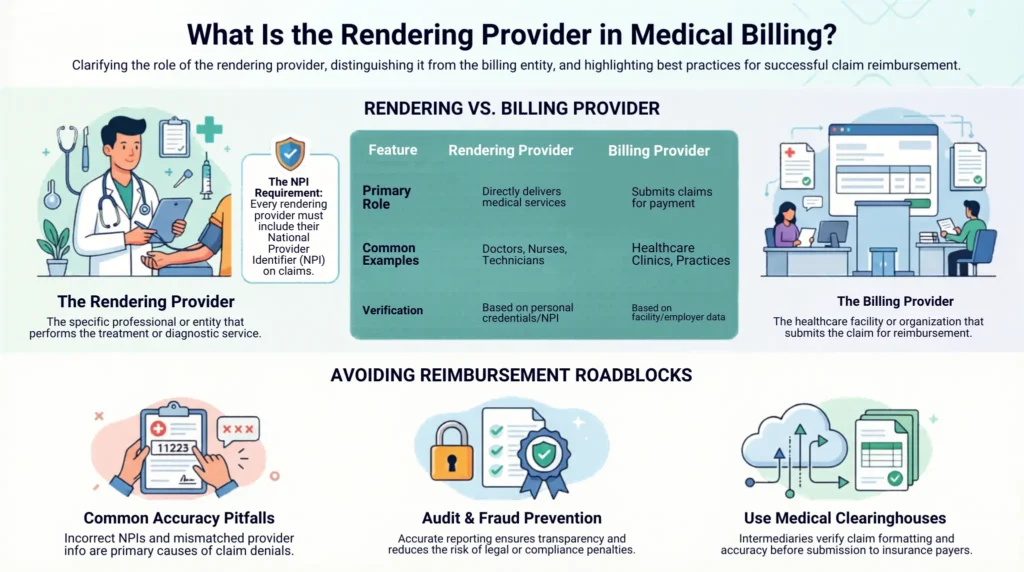
The rendering provider is the healthcare professional or entity responsible for delivering medical services. Their details must be included in the claim form to confirm the claim is processed and reimbursed correctly. The rendering provider can be a physician, therapist, or any other healthcare professional licensed to provide care. The rendering provider’s NPI number, along with their qualifications and the services they performed, are critical for the accuracy of the claim. Correctly defining the rendering provider confirms that healthcare providers receive reimbursement for the services they deliver while maintaining compliance with billing regulations.
Role of the Rendering Provider in Medical Billing
The role of the rendering provider in medical billing is crucial for ensuring that medical claims are processed correctly. The rendering provider’s name, credentials, and NPI number are required to be included in the claim form to identify the professional who performed the service. This helps insurance companies verify the qualifications of the provider and confirms that the correct reimbursement is made. Without proper identification of the rendering provider, claims may be rejected or delayed, leading to disruptions in the revenue cycle. Healthcare practices must confirm that they include accurate and up-to-date information about their rendering providers on all claims.
Why Accurate Rendering Provider Information Is Vital for Claims Processing
Accurate rendering provider information is vital for a smooth claims processing experience. Insurance companies use the provider’s information to verify the eligibility of the claim and confirm that the reimbursement is made to the correct professional or facility. If there is a mismatch or error in the rendering provider’s details, it can cause significant delays, denials, and even audits. By accurately reporting the rendering provider’s information, healthcare practices can minimize the risk of claim rejections, confirm faster processing, and avoid issues with payer audits. This also helps confirm compliance with industry standards and regulations, reducing the risk of penalties or legal complications.
Common Mistakes with Rendering Provider Information
Despite its importance, errors in rendering provider information are common in the medical billing process. These errors can result in delayed payments, denied claims, or incorrect reimbursements. Some of the most common mistakes include:
- Incorrect NPI Number: An incorrect or outdated NPI number can cause a claim to be rejected.
- Mismatched Provider Information: If the rendering provider’s details do not match the records in the insurer’s database, the claim may be delayed or denied.
- Missing Credentials: Failing to include the rendering provider’s credentials or certifications can lead to claim rejections.
- Incorrect Service Codes: Incorrect coding of services performed by the rendering provider can also result in billing issues.
Healthcare providers must confirm that all information related to the rendering provider is accurate and up-to-date to prevent these errors from occurring.
How to Ensure Accuracy in Rendering Provider Information
To confirm that rendering provider information is accurate and claims are processed efficiently, healthcare organizations should adopt the following best practices:
- Regularly Update Provider Information: Confirm that all details of the rendering provider, such as their NPI number, credentials, and qualifications, are up to date in the system.
- Double-Check Claims Before Submission: Review all claims for accuracy, particularly the rendering provider’s information, before submitting them to insurance companies.
- Implement Automated Systems: Use automated systems or clearinghouses to verify that claims are submitted with the correct rendering provider information.
- Train Billing Staff: Confirm that billing staff are trained to properly document and report the rendering provider’s details on claims.
By following these practices, healthcare organizations can reduce errors and streamline their billing processes, leading to faster and more accurate reimbursements.
Conclusion
The rendering provider is an essential component of the medical billing process. By understanding their role and ensuring that accurate information is provided, healthcare providers can minimize the risk of billing errors and confirm timely reimbursement for the services they provide. Whether through Biller RCM services, understanding the distinction between the rendering and billing providers, or using reliable clearinghouses, accurate reporting of the rendering provider’s details is vital for maintaining financial health in healthcare practices.

Higher Approvals, Faster Payouts: Specialized Chiropractic Billing

Error-Free Pediatric Billing: Maximize Practice Reimbursements
You Might Also Like

Higher Approvals, Faster Payouts: Specialized Chiropractic Billing

Error-Free Pediatric Billing: Maximize Practice Reimbursements