
Top 5 Urgent Care Billing Challenges and How to Solve Them

Urgent care centers provide fast and accessible medical services to patients who need immediate attention but may not require an emergency room visit. Because urgent care facilities handle a wide variety of patients, insurance plans, procedures, and medical conditions, their billing processes can become complex. Urgent care billing challenges can lead to claim denials, delayed reimbursements, administrative costs, and cash flow problems when they are not managed effectively. A streamlined billing workflow is essential for urgent care organizations that want to improve reimbursement while maintaining efficient patient services. From insurance verification and accurate coding to denial management and patient billing, every stage of the revenue cycle can influence financial performance. Med Bill Ultra is a comprehensive medical billing and revenue cycle management solution designed to help healthcare organizations automate billing workflows, improve claim accuracy, manage denials, and strengthen revenue cycle performance. This guide explores the top five urgent care billing challenges and how to solve them.
1. Insurance Verification and Eligibility Issues
Insurance eligibility is one of the most common challenges in urgent care billing. Patients often arrive without appointments, and staff may have limited time to verify coverage before treatment. If a patient’s insurance is inactive, expired, or does not cover a particular service, the resulting claim may be rejected or the balance may become the patient’s responsibility. Manual verification can also result in inaccurate or outdated information. These issues can create unnecessary billing work and delay reimbursement.
How to Solve Insurance Verification Problems
Automated insurance eligibility verification can significantly improve the front-end billing process. By checking coverage information before or during the patient registration process, urgent care centers can identify potential insurance problems earlier. Staff should also verify demographic information and confirm that the patient’s insurance details are entered accurately. Using an integrated billing system helps ensure that verified information flows correctly into the claim. Med Bill Ultra can support streamlined insurance and billing workflows, helping urgent care organizations reduce avoidable eligibility-related claim problems.
2. Medical Coding and Documentation Errors
Urgent care centers treat a broad range of conditions, which makes accurate medical coding particularly important. Incorrect CPT, ICD-10-CM, or HCPCS coding can lead to claim rejections, underpayments, overpayments, or compliance concerns. Documentation must support the services reported on the claim. Missing or inconsistent documentation can make it difficult to justify billed services to insurance companies.
Contact Us
How to Improve Coding Accuracy
Urgent care organizations should establish consistent coding and documentation workflows. Providers need to document services clearly, while coding teams should review claims for accuracy before submission. Automated claim-scrubbing technology can identify potential coding inconsistencies and missing information before claims are transmitted to payers. Med Bill Ultra helps billing teams improve claim quality through automated validation and organized billing workflows. By identifying potential problems before submission, the platform can help reduce preventable rejections and improve the overall claims process.
3. High Claim Denial Rates
Claim denials can have a significant impact on urgent care revenue. Denials may occur because of eligibility problems, incorrect patient information, coding errors, missing authorization, duplicate claims, or payer-specific requirements. When denials are not handled promptly, unpaid claims can remain in accounts receivable for extended periods. This can negatively affect cash flow and increase administrative workload.
How to Reduce Urgent Care Claim Denials
The most effective denial management strategy is prevention. Claims should be reviewed for common errors before submission, and urgent care organizations should track the reasons for rejected and denied claims. Analyzing denial patterns can reveal recurring problems in registration, coding, documentation, or payer workflows. Once the underlying cause is identified, organizations can update their processes to prevent similar issues. Med Bill Ultra provides tools for claim management and denial tracking, helping billing teams identify outstanding claims and organize follow-up activities more efficiently.
4. Managing High Patient Volumes
Urgent care facilities often experience significant fluctuations in patient volume. Busy periods can create pressure on front-desk staff, clinical teams, and billing departments. When patient registration and billing information are entered manually, high volumes can increase the risk of errors. Delayed claim submission can also occur when billing teams become overwhelmed by large numbers of encounters.
How to Improve High-Volume Billing
Automation is essential for urgent care centers managing large patient volumes. Digital registration, automated eligibility checks, electronic claim submission, and centralized billing workflows can help staff process more encounters efficiently. Standardized workflows also reduce repetitive tasks and improve consistency. Med Bill Ultra provides an integrated approach to medical billing and revenue cycle management, allowing urgent care organizations to manage claims, payments, denials, and accounts receivable from a centralized platform.
5. Patient Billing and Outstanding Balances
Patient responsibility has become an increasingly important part of healthcare revenue. Copayments, deductibles, coinsurance, and non-covered services can create balances that urgent care centers need to collect. Unclear statements or inaccurate patient information can make it difficult for patients to understand what they owe. Poor communication may delay payments and increase outstanding accounts.
How to Improve Patient Billing
Urgent care centers should provide clear and accurate patient statements that explain the amount due and relevant payment information. Patient financial responsibility should be communicated as early as possible when appropriate. Accurate insurance processing also helps ensure that patient balances are calculated correctly after payer adjudication. Digital billing workflows can make statements and payment information easier to manage while reducing administrative work.
The Role of Revenue Cycle Management in Urgent Care
Revenue Cycle Management covers the complete financial process from patient registration through final payment. For urgent care organizations, effective RCM is essential because high patient volumes and diverse services create numerous opportunities for billing errors. A strong revenue cycle includes accurate registration, insurance verification, coding, claim submission, payment posting, denial management, patient billing, and accounts receivable follow-up. Automating these processes can improve efficiency while allowing staff to focus on complex cases and patient service.
How Med Bill Ultra Helps Solve Urgent Care Billing Challenges
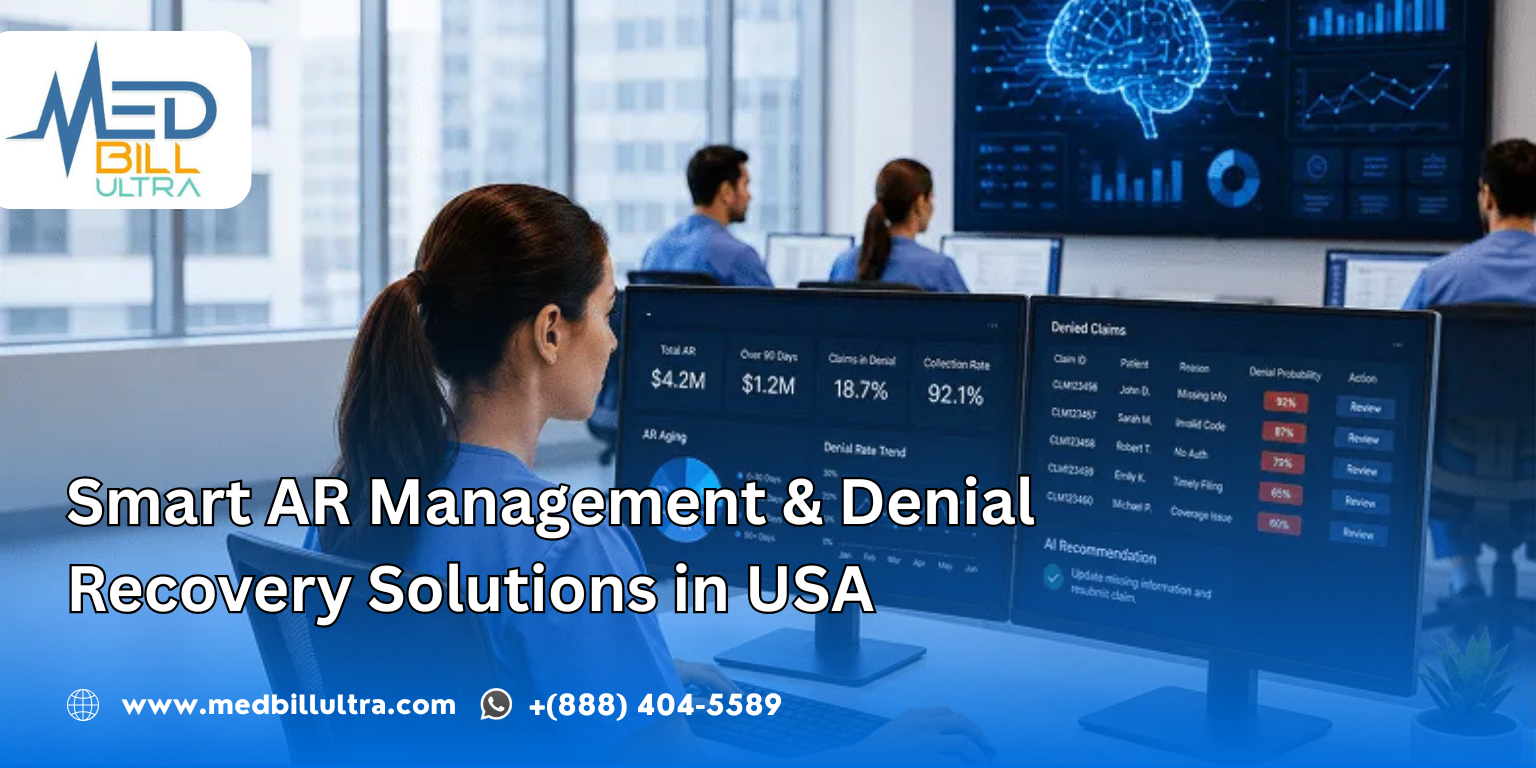
Med Bill Ultra is an advanced medical billing and revenue cycle management software designed to help urgent care centers and other healthcare organizations improve financial efficiency. The platform supports insurance verification workflows, claim creation, claim scrubbing, electronic claim submission, payment posting, denial management, accounts receivable tracking, and financial reporting. By connecting these processes within one system, Med Bill Ultra reduces unnecessary manual work and improves visibility throughout the revenue cycle. Its automated claim validation features help identify potential errors before claims are submitted. This can reduce preventable rejections and improve the quality of submitted claims. Med Bill Ultra also provides real-time dashboards that help administrators monitor claims, denials, reimbursements, collections, and outstanding accounts receivable. This information enables billing managers to identify problems quickly and make informed decisions. Integration with Electronic Health Record systems can help reduce duplicate data entry and maintain consistency between clinical and billing information. Secure cloud-based technology also supports controlled access and reliable data management. Whether an urgent care center operates from one location or manages multiple facilities, Med Bill Ultra provides scalable tools to support growing billing volumes.
Improving Urgent Care Revenue With Automation
Automation can transform the financial performance of urgent care organizations by reducing repetitive administrative work and improving billing accuracy. Automated workflows can help staff identify insurance problems, validate claims, track unpaid accounts, and manage denials more efficiently. Faster claim submission and improved follow-up can contribute to healthier accounts receivable and more predictable cash flow. The goal is not simply to automate every task but to create a workflow where technology handles repetitive processes while skilled staff focus on exceptions and complex billing situations.
Importance of Real-Time Billing Analytics
Urgent care managers need accurate financial information to understand how their billing operations are performing. Real-time analytics can show claim acceptance rates, denial trends, payment activity, outstanding balances, and collection performance. These insights allow management teams to identify bottlenecks and improve processes based on actual data. With better visibility, urgent care organizations can move from reactive billing management toward proactive revenue cycle optimization.
Building a More Efficient Urgent Care Billing Workflow
A successful urgent care billing workflow begins with accurate patient registration and insurance information. It continues with proper documentation, accurate coding, claim validation, electronic submission, timely payment posting, and proactive denial management. Technology can connect each stage so information flows smoothly throughout the revenue cycle. Organizations that continuously monitor performance and improve their workflows are better positioned to reduce billing errors and maximize reimbursement.
Conclusion
Urgent care centers face unique financial challenges because they manage high patient volumes, diverse medical services, multiple insurance plans, and fast-paced clinical environments. Insurance eligibility problems, coding errors, claim denials, high patient volumes, and outstanding patient balances can all affect revenue cycle performance. The solution is a combination of accurate processes, trained staff, proactive denial management, and reliable medical billing technology. Med Bill Ultra helps urgent care organizations streamline their revenue cycle with automated billing workflows, claim validation, denial tracking, payment management, accounts receivable monitoring, and real-time financial reporting. By reducing manual work and improving billing visibility, Med Bill Ultra enables urgent care providers to focus more on patient care while building a more efficient and financially sustainable billing operation.
Latest News

Higher Approvals, Faster Payouts: Specialized Chiropractic Billing
October 16, 2026
No Comments
Read More »
You Might Also Like

Higher Approvals, Faster Payouts: Specialized Chiropractic Billing
October 16, 2026
No Comments
Read More »

Error-Free Pediatric Billing: Maximize Practice Reimbursements
October 15, 2026
No Comments
Read More »
