What Is Interoperability in Healthcare and Why Is It Important?
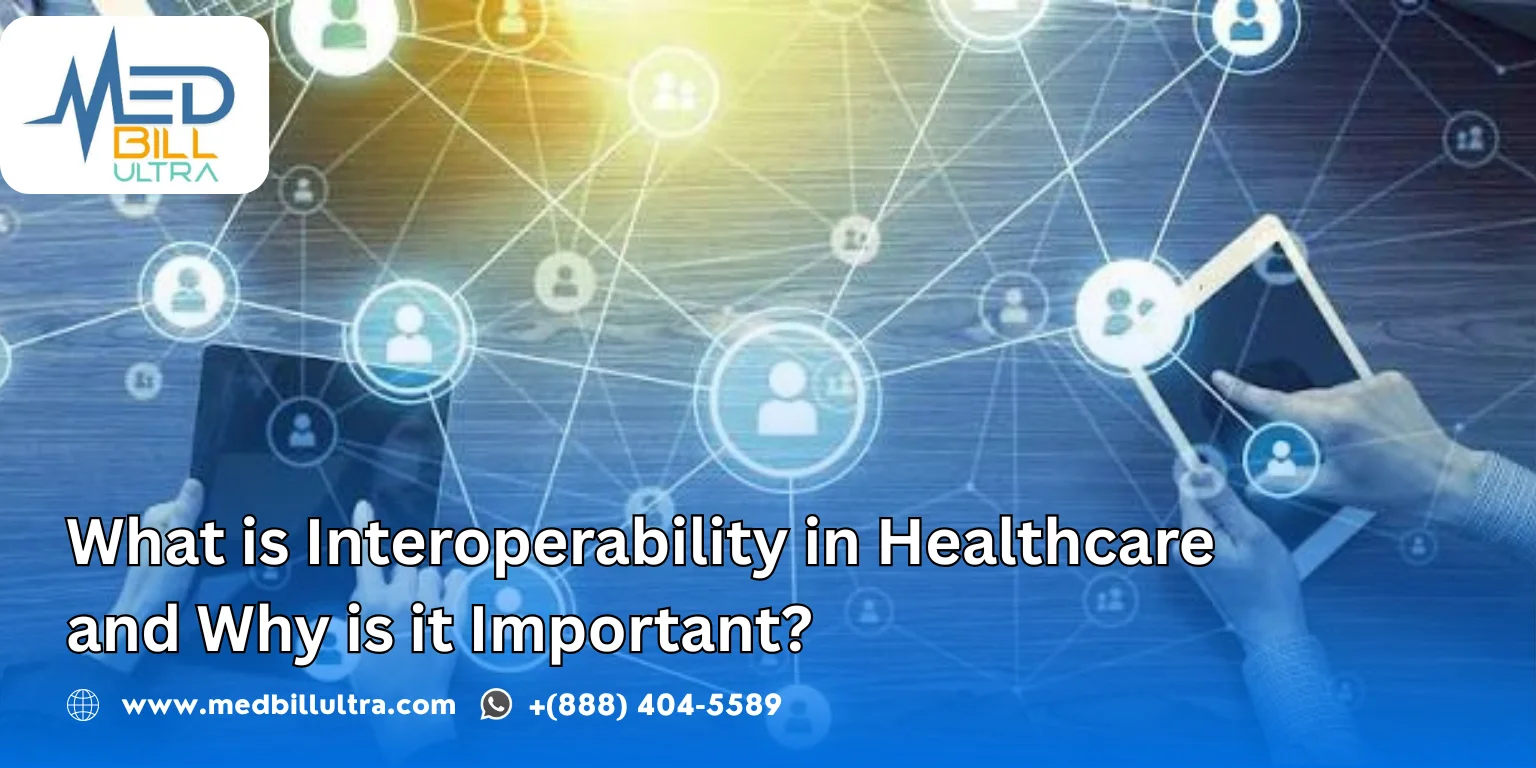
Healthcare organizations rely on large amounts of patient and administrative data every day. From electronic health records and laboratory results to insurance information and medical billing data, this information often moves between different healthcare providers, systems, and organizations. Interoperability in healthcare makes it possible for these systems to exchange and use information effectively. As healthcare becomes increasingly digital, interoperability is playing an important role in improving communication, reducing administrative work, supporting better decision-making, and creating more connected healthcare workflows. Medical billing and revenue cycle management can also benefit when important patient, insurance, and claims information moves accurately between systems.
What Is Interoperability in Healthcare?
Interoperability in healthcare refers to the ability of different healthcare information systems, software applications, and organizations to exchange, access, and use health information in a meaningful way. It allows systems that may have been developed by different vendors to communicate with each other instead of keeping information isolated. For example, a patient’s healthcare information may be stored in an electronic health record system while insurance information and billing data are managed through separate platforms. Interoperable systems can help transfer relevant information between these platforms, reducing the need for healthcare staff to enter the same information repeatedly.
Why Is Healthcare Interoperability Important?
Healthcare interoperability is important because healthcare data is often distributed across multiple systems. Without effective data exchange, providers and administrative teams may spend significant time searching for information, manually entering data, or communicating through inefficient processes. Interoperability can help create a more connected healthcare environment where authorized users can access relevant information when needed. This can support more efficient workflows, improve data accuracy, and reduce unnecessary administrative tasks. For healthcare organizations, better connectivity can also contribute to more efficient billing and revenue cycle processes because patient demographics, insurance information, clinical documentation, and claims-related data can be exchanged more effectively.
How Does Interoperability Improve Patient Care?
Interoperability can support patient care by making relevant information more accessible to authorized healthcare professionals. When information from different sources can be exchanged effectively, providers may have a more complete view of a patient’s medical history. For example, information about previous treatments, medications, laboratory results, or diagnostic procedures can be available through connected systems when appropriate. This can reduce reliance on incomplete records and help healthcare professionals make decisions using more comprehensive information. Interoperability does not replace clinical judgment, but it can provide healthcare professionals with better access to the information they need.
Contact Us
Interoperability and Electronic Health Records
Electronic health records, commonly known as EHRs, are an important part of modern healthcare interoperability. EHR systems store patient information digitally, but simply having electronic records does not guarantee that different systems can communicate with one another. Interoperability allows information to move between compatible systems using established standards and technologies. This can help healthcare organizations exchange patient information between hospitals, physician practices, laboratories, pharmacies, specialists, and other authorized healthcare entities. A connected EHR environment can reduce information silos and make healthcare data more useful across different stages of the patient journey.
How Interoperability Helps Medical Billing
Interoperability is also relevant to medical billing because billing teams depend on accurate and timely information. Patient demographics, insurance details, provider information, diagnoses, procedures, and documentation can all affect the claims process. When billing systems can communicate with other healthcare platforms, information can move more efficiently from clinical workflows to billing operations. This can reduce duplicate data entry and help billing teams identify missing or inconsistent information before claims are submitted. Better data exchange can also support cleaner claims, faster processing, and improved revenue cycle management when combined with appropriate billing processes and accurate coding.
Interoperability and Revenue Cycle Management
Revenue cycle management involves many connected steps, including patient registration, insurance verification, charge capture, medical coding, claim submission, payment posting, denial management, and accounts receivable follow-up. Each stage depends on accurate information. If data is trapped in separate systems, staff may need to manually transfer information from one platform to another. This can increase administrative workload and create opportunities for errors. Interoperable systems can help connect different parts of the revenue cycle. When billing teams have access to relevant information through connected workflows, they can spend less time searching for data and more time managing claims, payments, and outstanding balances.
Common Healthcare Interoperability Standards
Healthcare interoperability depends on standards that allow different systems to understand and exchange information. Standards such as HL7 and FHIR are widely associated with healthcare data exchange and help systems communicate using structured approaches. FHIR, or Fast Healthcare Interoperability Resources, is designed to facilitate the exchange of healthcare information through modern technologies and application programming interfaces. These standards help establish common methods for exchanging information between healthcare applications. Using recognized standards can make it easier for healthcare organizations and technology vendors to develop systems that communicate with one another.
Challenges of Healthcare Interoperability
Although interoperability offers significant advantages, implementing it can be challenging. Healthcare organizations may use different software platforms, data formats, workflows, and technologies. Connecting these systems requires careful planning and technical coordination. Data security and privacy are also important considerations. Healthcare organizations must protect sensitive patient information while enabling authorized data exchange. Poorly configured integrations can create security and data-quality risks. Another challenge is ensuring that exchanged information is accurate, complete, and understandable across systems. Interoperability is therefore not simply about moving data from one system to another; the receiving system must also be able to interpret and use that information correctly.
Interoperability and Healthcare Data Security
Healthcare data contains sensitive information, making security a critical part of interoperability. Organizations need appropriate safeguards to control who can access information and how data is transferred between systems. Secure authentication, access controls, encryption, monitoring, and appropriate privacy practices can help protect healthcare information. Healthcare organizations should also ensure that integrations follow applicable regulations and organizational security requirements. Effective interoperability should therefore balance accessibility with privacy and security.
How Med Bill Ultra Supports Connected Billing Workflows
Medical billing organizations need efficient systems to manage patient information, claims, payments, denials, and revenue cycle activities. Med Bill Ultra can support modern medical billing workflows by helping billing teams organize and manage important billing information more efficiently. By supporting structured billing processes and centralized revenue cycle management, Med Bill Ultra can help reduce unnecessary administrative work and improve visibility into billing operations. When used alongside interoperable healthcare systems and appropriate integrations, billing teams can work with more connected information throughout the revenue cycle. The goal is to create a smoother workflow in which accurate information can move efficiently between relevant healthcare and billing processes.
The Future of Interoperability in Healthcare
Healthcare interoperability is expected to remain an important part of digital healthcare development. As healthcare organizations adopt cloud platforms, APIs, artificial intelligence, automation, and other digital technologies, the ability to exchange information between systems becomes increasingly important. Greater interoperability can help connect providers, patients, laboratories, pharmacies, insurers, and administrative systems. It can also support more automated workflows and reduce the amount of manual data entry required by healthcare staff. The future of healthcare will increasingly depend not only on collecting digital information but also on making that information accessible and useful across connected systems.
Conclusion
Interoperability in healthcare enables different healthcare systems and applications to exchange and use information effectively. It can improve data accessibility, support patient care, reduce repetitive administrative work, and strengthen medical billing and revenue cycle workflows. For medical billing organizations, interoperability can help connect clinical information with billing processes, supporting more efficient claims management and better data flow. Solutions such as Med Bill Ultra can complement these connected workflows by helping healthcare billing teams manage revenue cycle activities efficiently. As healthcare continues to become more digital, effective interoperability will remain an important foundation for connected, efficient, and data-driven healthcare operations.

Higher Approvals, Faster Payouts: Specialized Chiropractic Billing

Error-Free Pediatric Billing: Maximize Practice Reimbursements
You Might Also Like

Higher Approvals, Faster Payouts: Specialized Chiropractic Billing

Error-Free Pediatric Billing: Maximize Practice Reimbursements